Types of yoga: how they differ and how to choose yours
Hatha, Vinyasa, Ashtanga, Iyengar, Yin, Nidra and FYSM: a practical map of approaches, with questions to help you choose a class that fits your life.
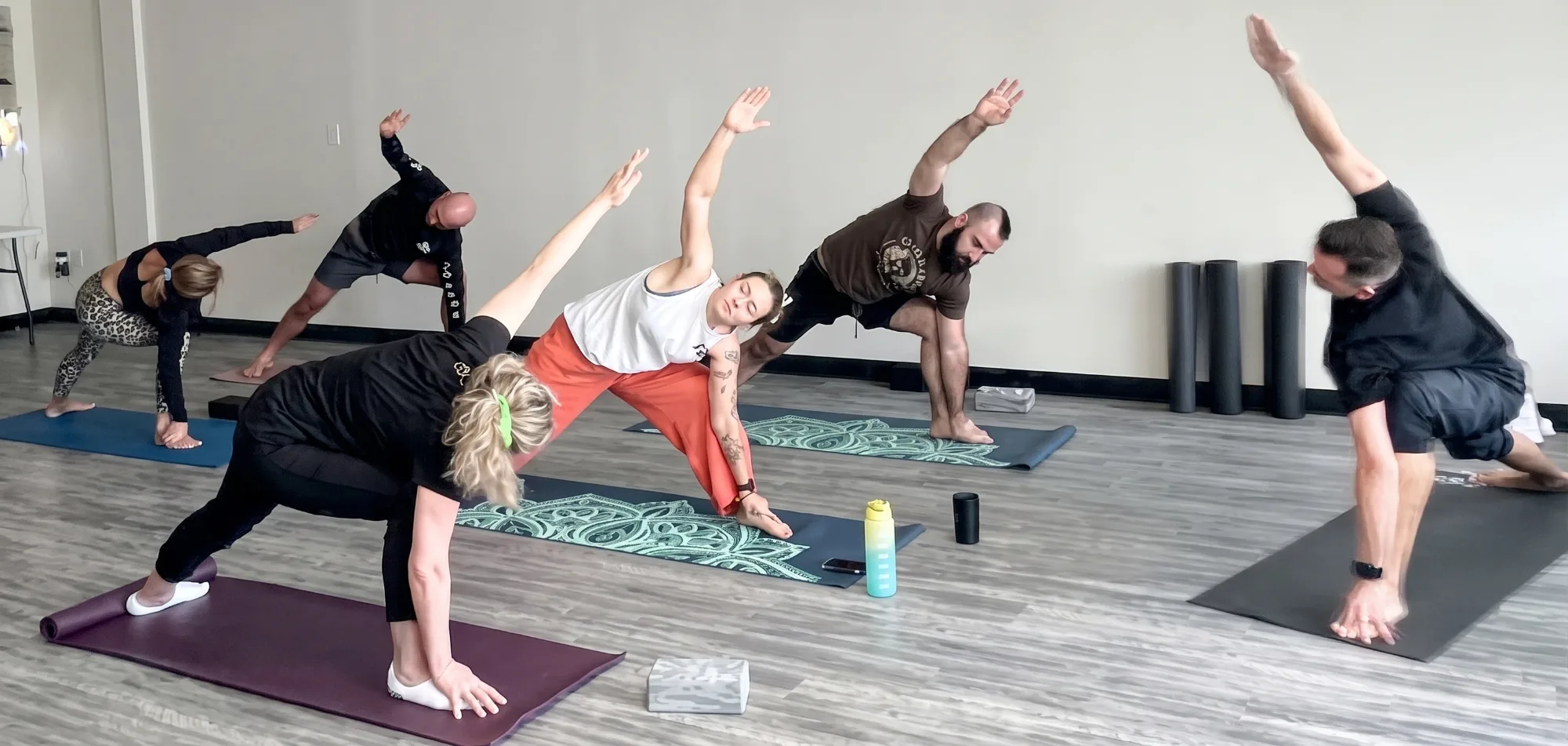
You open a studio timetable: Hatha, Vinyasa, Ashtanga, Yin, Nidra. Some classes promise relaxation; others promise a serious workout. Meanwhile, you're trying to work out where to take your rather stiff body, and where a class might fit between “urgent” and “already late”.
I teach FYSM and enjoy having a clear structure to practise within. But I would start choosing a style with what you need from it. Let's look at what those names mean and how classes can differ in practice.
Which type of yoga is best?
The best format for you fits your current capacity, how you like to learn and the life you actually lead. One person wants an active practice, another wants detailed movement instruction, and someone else would really appreciate a little time lying down without a phone.
A class name tells you only part of the story. Slow doesn't necessarily mean easy, and “for beginners” doesn't mean a class is appropriate for every health condition.
These categories also overlap. Hatha is a broad tradition of physical practice, while studio timetables often use it for a particular class format. Vinyasa describes a connection between movement and breath found in different schools. Yoga Nidra is a distinct attention and relaxation practice. Comparing them as if they were phones with identical specification sheets only gets us so far.
A quick map of the main approaches
| Approach | What the class involves | What to look at |
|---|---|---|
| Hatha yoga | Postures, breathing, holds and transitions chosen by the teacher | The pace and level of this particular class |
| Vinyasa / flow | Movements linked into sequences with attention to breathing | The speed of transitions and time for explanations |
| Ashtanga Vinyasa | Learning an established sequence with movement, breathing and gaze | How beginners are introduced to and supported within the series |
| Iyengar yoga | Detailed work on body position, using props when appropriate | Whether there is an introductory class and what equipment is needed |
| Critical Alignment Yoga | Exploring movement habits, tension and connections through the body | Which specialised tools you will need |
| Yin yoga | Longer-held postures with relatively little movement between them | How the depth and duration of a hold are chosen |
| Yoga Nidra | Following spoken guidance and observing sensations and attention, often lying down | A comfortable position and a teaching style that suits you |
| FYSM | Prepared sequences with different training focuses and modes of practice | A suitable session length and level of effort to begin with |
These are starting points for getting to know a class. Teachers, groups and ways of explaining can vary considerably within the same approach.
Hatha, Vinyasa and Ashtanga: what changes?
Hatha: find out what the class actually contains
On a modern timetable, Hatha might mean learning postures step by step, holding them for longer or doing quite demanding physical work. The label alone won't tell you how much you will move or how much explanation you will receive.
I would ask: “Is this suitable for someone with no experience? Can I choose variations? What will we be doing?” That's more useful than trying to become flexible enough for yoga before you start.
Vinyasa: paying attention to transitions
If you enjoy movement and exploring its connection with breathing, you might try Vinyasa. The way you move between postures matters alongside the postures themselves.
Intensity varies. Kripalu, for example, describes gentle, intermediate and vigorous forms of Vinyasa. The word flow doesn't, by itself, tell you how demanding a particular class will feel. Kripalu's description of Vinyasa.
Ashtanga: returning to a familiar sequence
In Ashtanga Vinyasa, an established order of postures is connected with breathing, movement and gaze. This may appeal to people who enjoy returning to a series and gradually learning its details. Ashtanga Yoga Kendra's description of the practice.
Ask the teacher where to begin and how beginners learn the sequence. A photograph of a difficult posture doesn't show the whole process of getting there.
If you want to explore movement in detail
Iyengar yoga places considerable emphasis on precise body positioning and progressively learning postures. Blocks, belts, blankets and other props help organise the work around the task. A prop is a learning tool; using one doesn't make your practice less valid. About the Iyengar method.
Critical Alignment Yoga is Gert van Leeuwen's approach to movement habits, habitual tension and movement quality. It uses specialised tools and has separate Yoga and Therapy programmes. If you're joining online, check what you will need at home. About Critical Alignment.
A style name cannot diagnose what your back needs. If you have pain or an injury, discuss an appropriate level of activity with a healthcare professional and your teacher.
Yin yoga and Yoga Nidra: two different ways to slow down
In Yin yoga, you stay in postures for longer. A small amount of movement can look easy from the outside, but a prolonged hold can still involve significant effort or loading. A suitable range and the ability to come out of a position matter more than waiting out a timer. Bernie Clark on time in Yin yoga.
In Yoga Nidra, you follow guidance and observe sensations, attention and your experience. People often practise lying down, but a comfortable position can be chosen. iRest, one modern approach to Yoga Nidra, allows different positions. Choosing a Yoga Nidra position.
For a closer look at attention practice, see my article “Meditation basics, or learning to do nothing and get something out of it”.
A few more names you may see on a timetable
Kundalini yoga. Classes combine sets of exercises, breathing, mantra and meditation. Before attending, explore whether that way of practising appeals to you. The KRI description.
Sivananda yoga. This tradition places postures, breathing and relaxation alongside meditation, philosophy and lifestyle guidance. The context extends beyond a physical workout. Sivananda's teachings.
Anusara yoga. The school brings together principles of body alignment, a philosophical approach and community. If the meaning behind the practice matters to you, its description is a useful place to begin. About Anusara.
Power Yoga. The name often refers to physically demanding classes, but it doesn't prescribe one universal sequence. Ask about the programme. Bryan Kest, one of the approach's originators, also emphasises attention and an individual measure of effort. His description of Power Yoga.
Bikram and hot yoga. Bikram uses a particular series of 26 postures and two breathing exercises in a heated room. Other heated classes may use different sequences. Heat adds another demand: NCCIH notes risks of overheating and dehydration. About the series · Precautions.
AcroYoga. A partner practice involving acrobatics, communication and spotting. Learning with people who know how to organise support is important. About the AcroYoga format.
Where does FYSM fit?
FYSM stands for Fresh Yoga Synthesized Methodology. Developed by Igor Kovalev, it is the methodology I teach at YogaCraft. It uses prepared training sequences; the school describes 27 algorithms at its first teacher-training level. Official website · Training levels.
What I value is the opportunity to work regularly on strength, mobility, balance and attention within a clear structure. Our club offers short recordings and sessions up to an hour, live Zoom classes and contact with a teacher.
For a closer comparison of FYSM, Hatha, Ashtanga and Critical Alignment Yoga, read this article. For what you might enjoy and what may take some getting used to, see my honest guide to your first FYSM classes.
How to choose your first class
I would start with five questions:
- What do you want right now? More active movement, detailed instruction, a chance to slow down or a return to regular practice?
- What limitations should be considered? Tell your teacher about injuries and health conditions. Discuss activity with a healthcare professional first when appropriate.
- How do you like to learn? Detailed explanations, a repeated series, freer movement, a live class or a recording?
- How much time do you really have? Include travel and preparation, and consider whether you can repeat the experience next week.
- Do you understand what to do? Can you ask a question, pause and choose an easier variation?
Begin with an introductory class and assess the actual experience. Do the explanations make sense? Is the effort manageable? Would you like to return? One unsuitable class doesn't describe all of yoga.
If a structured practice at home with a teacher and group sounds appealing, you can get to know our format.
Try FYSM at YogaCraft — start your free week →
First, verify your email and complete the required intake about your goals and limitations. You start the trial week with a separate button. No card is required, and the trial doesn't automatically create a subscription.