FYSM yoga: who it suits and how it compares with other approaches
How FYSM sequences work, how the approach compares with Hatha, Ashtanga and Critical Alignment Yoga, and why it works well for practising at home.
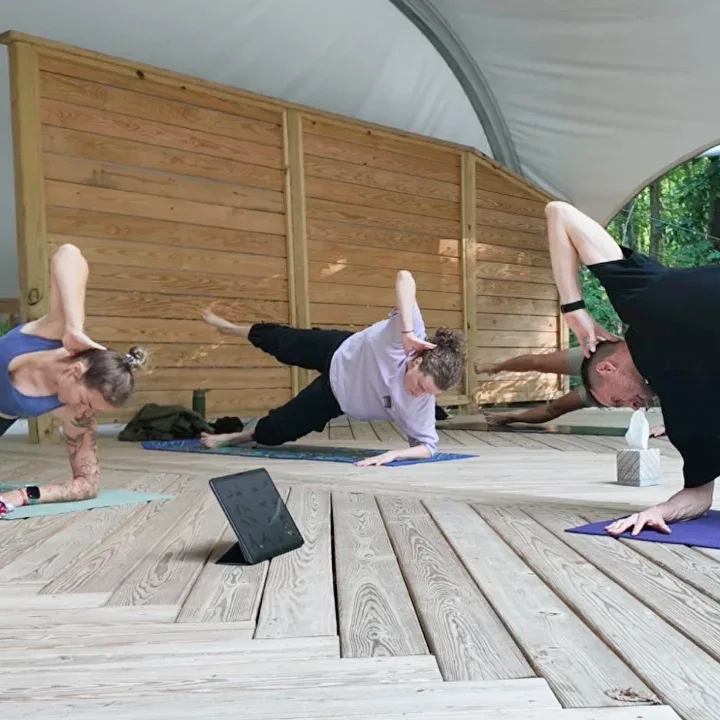
Choosing a yoga class by its name isn't easy. Some promise relaxation, others strength and discipline; some focus on tension in your back. You might simply want to move regularly, feel less tired and become more comfortable in your own body.
At YogaCraft, I teach using the FYSM methodology. I like its structure: we know what the practice consists of, what kind of effort we're choosing and how to fit classes into everyday life. Here's who this approach might suit and how it compares with other formats.
What is FYSM?
FYSM stands for Fresh Yoga Synthesized Methodology. Created by Igor Kovalev, it is a yoga system with progressive training levels and a set of established practice sequences. The official FYSM website.
An algorithm, in this context, is a sequence of exercises with a particular logic. The teacher doesn't build every class from scratch: there is a foundation to explain, repeat and adapt to the group's level.
The school describes 27 algorithms at the first level. Practices have different focuses: the core, upper body or legs. This provides variety within a clear system. The FYSM teacher training school.
In the club, you can choose a short practice of around 20–30 minutes or a longer class of up to an hour. That makes it easier to practise on days when finding time for a full session is difficult.
What this structure offers
For me, FYSM's versatility means being able to work on several things in one practice: strength, mobility, balance, endurance and awareness of the breath.
The focus matters. A leg-focused class will feel different from one for the core or upper body. We can change the goal of a session while keeping the overall approach familiar.
Repeating familiar elements also supports learning. Over time, it becomes easier to follow the explanations, notice habitual compensations and choose an appropriate variation. You can then give more attention to the quality of your movement.
Adapting the effort matters more than the difficulty of a pose. You don't need to be able to stand on your head or do a deep backbend to begin. What matters is learning movements that are accessible to you and building up gradually.
FYSM, Hatha and Ashtanga: how do they differ?
Classes called “Hatha yoga” can vary enormously, from gentle to intense. Their content and sequence depend largely on the school and teacher. It's worth asking about the pace and intensity before your first class.
In Ashtanga Vinyasa, an established sequence and the connection between movement and breath play a prominent role. This can appeal to people who enjoy repetition and gradually learning a series. Ashtanga Yoga Kendra's description of the practice.
What I value in teaching FYSM is its range of ready-made sequences with different focuses. They let me maintain structure, vary the goals of a class and choose its length.
| Feature | FYSM | Hatha yoga | Ashtanga | Critical Alignment Yoga |
|---|---|---|---|---|
| Established sequences and structure | ✅ Yes — 27 algorithms | Depends on the school | ✅ Yes — set series | ✅ Yes — a structured method |
| Core / upper body / legs focus | ✅ Part of the system | Depends on the class | Different focuses within a series | Connections in the body; working with tension |
| Choice of a short or hour-long practice | ✅ 20–60 minutes | Depends on the class | Depends on the class | Depends on the class |
| Main emphasis | Strength, mobility, endurance | The school's programme | Series, movement, breath | Tension and movement quality |
The 27 algorithms belong to the first level of FYSM. The session lengths refer to our online club; the formats available in other approaches depend on the school and teacher.
FYSM and Critical Alignment Yoga
Critical Alignment Yoga, or CAY, takes its own approach to tension, posture and the quality of movement.
Gert van Leeuwen's method describes how movement connects through the body, how to work with habitual tension, and how to combine relaxation with active movement. It uses specialised tools. The school has separate Yoga and Therapy programmes. About the Critical Alignment method.
In FYSM, I focus on a progressive training practice: varying the effort, strength work, mobility and the goals of each class. What interests me in Critical Alignment Yoga is its attention to movement habits and tension. Choosing between them starts with what you're looking for and getting to know the teacher.
If you want to explore habitual tension and how you move, you might look into CAY. If you'd like regular classes with strength work, mobility and varied training focuses, you could try FYSM. These interests can overlap.
What if my back already hurts?
The name of a yoga style alone cannot tell you what level of effort is right for you. If you have pain, an injury or significant limitations, discuss practising with a healthcare professional first and let your teacher know about those limitations.
Yoga can be part of looking after your wellbeing, but it doesn't replace diagnosis or necessary treatment. NCCIH's overview notes a possible small benefit for low-back pain and the need to account for limitations when choosing a practice. Yoga: effectiveness and safety.
Why FYSM works well online
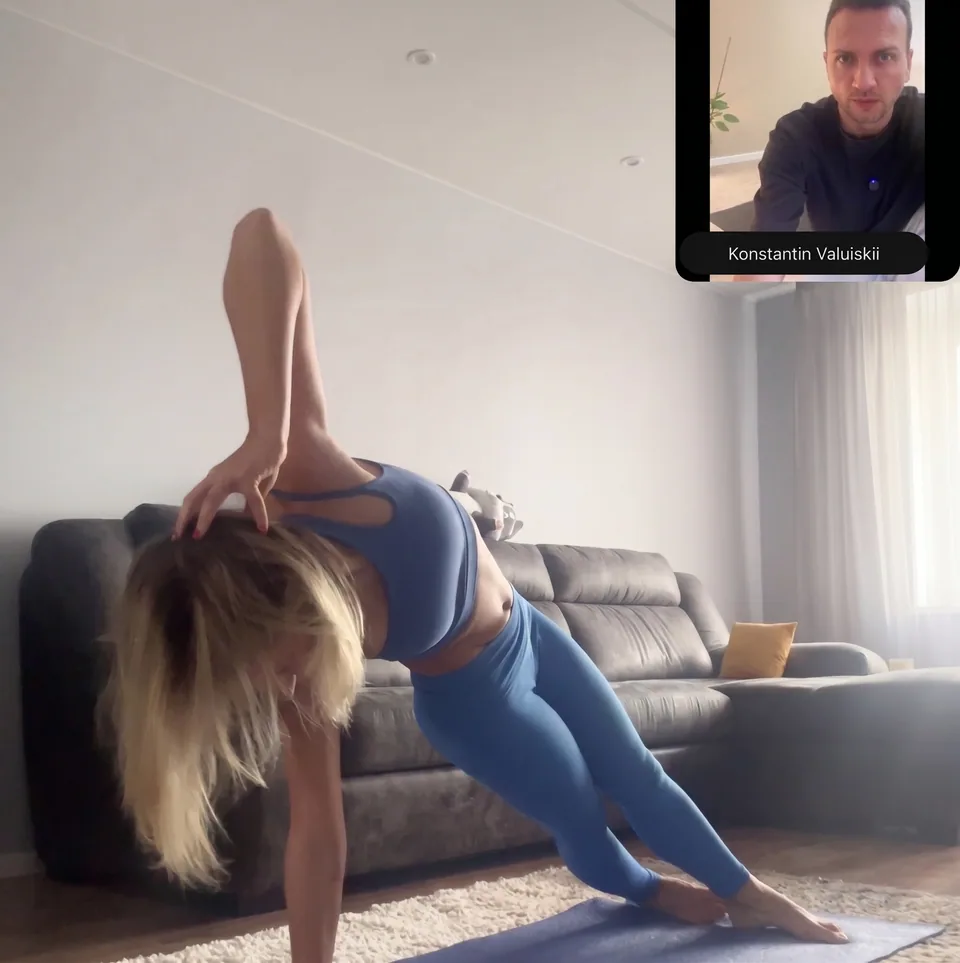
Not everyone can regularly get to a studio. Travel, work, children, moving home — sometimes arranging the class becomes the biggest obstacle.
Online, I find familiar sequences and step-by-step explanations helpful. Repeated elements become easier to recognise, and a short session is easier to fit into the day.
For basic YogaCraft classes, a mat and some clear space are enough. Special equipment usually isn't needed. If a particular class requires an additional support, check beforehand.
You can choose between two formats:
- A live Zoom class — practise with the group, ask questions and receive feedback within the limits of what the teacher can see through the camera.
- A recorded practice — practise at a convenient time, pause and return to explanations.
A recording doesn't provide personal corrections, and a camera cannot fully replace being observed in person. If a movement is unclear or painful, stop and ask rather than trying to copy it at any cost.
Other approaches also offer online formats. For example, Critical Alignment runs online classes using its own tools. When choosing, compare what you'll need at home and what support you'll receive. Critical Alignment online classes.
A method with room to grow
FYSM continues to develop: beyond practising for yourself, the school offers further training levels and a teaching community. Its official page describes a path from ZERO to FYSM 5, exams and certification, gatherings and support for teachers. FYSM training levels and community.
If you become more deeply interested in the practice, there is an opportunity to continue learning and eventually teach after the necessary training. Becoming a teacher is optional, though. You can practise for your own wellbeing, curiosity and time for yourself.
Who might like to try it?
FYSM may suit you if you want:
- clear structure and consistency;
- to combine strength and mobility, rather than focus only on stretching;
- a choice of class lengths;
- to practise at home while staying connected with a teacher and group.
If you're mainly looking for a calm, relaxing practice right now, ask about the class content first: FYSM includes strength work and endurance training. Our Russian-speaking online club also has a gentler Friday format 🪷. You can choose a session to match how you feel and what you need.
At YogaCraft, you can get to know the format through live classes and recordings. Before you begin, we ask you to complete an intake form about your goals and limitations. It helps us discuss what you're looking for and choose a starting point.
I suggest starting with an accessible practice and seeing whether this way of working suits you. You don't have to master a difficult pose straight away. The aim is to find time for yourself that you'll want to return to.
7 days of live classes and recordings — no card required.